
Rotary Club of Hong Kong Island West Hong Chi Morninghope School
香港西區扶輪社匡智晨輝學校
Curriculum for Foundation
Chinese Language

Learning Goals:
-
To develop the four skills, listening, speaking, reading and writing in Chinese
-
To utilise one’s language skills as a tool to acquire other knowledge in order to cope with daily-life needs
-
To build a positive attitude, good habits and morals through reading materials
-
To develop the thinking strategies, problem solving skills and self-regulatory learning.
-
To recognize the characteristics of Chinese culture.
Curriculum Framework:
The school-based curriculum is based on the four main language skills:
-
Listening
-
Through listening to stories, conversations, speeches, etc., students will be able to pay attention and understand key messages in spoken texts.
-
-
Speaking
-
Through activities such as dialogue exchange, reciting sentences, making descriptions, role-play, interviews, group discussions, etc., students will be able to express themselves through spoken words, the use of gestures, communication picture cards or the “Hong Chi Communication App”.
-
-
Reading
-
Through reading nursery rhymes, poems, stories, fairy tales, folktales, prose, shorts, practical writing activities, etc., students will be able to understand meanings of a range of vocabulary, sentences, paragraphs and passages.
-
-
Writing
-
Through writing practices on strokes, tracing characters, and copying vocabulary and sentences, students will be able to write following the stroke order with the appropriate pencil grip.
-
Through writing exercises, such as filling in the blanks, imitation, completing sentences, making sentences, filling out forms, completing a story, journal writing and practical writing activities, etc., students will be able to express themselves in a coherent manner.
-
Assessments:
-
Teachers observe the learning performance and participation of all students during their classes and through their written exercises. The evaluation will be recorded in the Unit Report to continuously assess the learning progress of the students.
-
By the end of each unit, there will be a summative assessment. The assessment includes tasks related to reading, writing, speaking and listening skills, in order to assess the students’ overall performance in that unit.
-
By the end of the school term, teachers will summarize and evaluate the performances of the students by looking at their performances during lessons and results from the summative assessment in each unit, in order to review the overall learning performances of the students.
Features of the Curriculum:
-
School-based curriculum, textbooks and exercise books are tailor-made according to the guidelines from the EDB and the abilities and needs of our students.
-
Lessons for peaking exercises are designed with our school’s speech therapists in order to enhance our students’ ability in listening, speaking and expressions.
-
We promote “reading to learn”, and incorporate storybooks into activities to develop the four language skills, in order to build an interest of reading in our students.
-
Remedial teaching is designed with the school occupational therapists for lower-achievers in writing, in order to enhance their visual and spatial skills, hand-eye coordination skills and writing skills.


Activities & Awards

日期:21-05-2026 地點:沙田車公廟 參與學生 / 組別:小學四至六年級
日期:21-05-2026 地點:沙田車公廟 參與學生 / 組別:小學四至六年級


General Studies
Learning Goals:
-
To understand their growth and development, develop a healthy lifestyle and respect for student themselves and others, and attach importance to harmonious interpersonal relationships;
-
To understand the development, characteristics and changes of the community in one’s neighbourhood as well as in other communities in Hong Kong.
-
To develop care and concern for the well-being of their families, the community of Hong Kong, the nation and the world; to develop the sense of responsibility, participate actively in school and group activities and serve the society.
-
To develop curiosity and interest in the natural world and technological world, as well as strengthen the ability for inquiry-based studies and promote student enquiry.
-
To understand the impact of science and technology on human society and the environment, and practise green living life style.
Curriculum Framework:
-
Health and Living:
-
KS1 (Mild ID): About Me, Vegetables and Fruits, Healthy Habits
-
KS1 (Moderate ID): About Me, I Can Do It, Common Food
-
KS2 (Mild ID): Healthy Diet, Health and Illnesses, Puberty (P6)
-
KS2 (Moderate ID): Healthy Diet, Exercises and Leisure, I am Growing Up (P6)
-
KS3 (Mild ID): My Body, Be a Happy Teenager, First Aid
-
KS3 (Moderate ID): Health and Illnesses, Proper Use of Leisure, How We Dress
-
-
People and Environment:
-
KS1 (Mild ID): Going to the Park, Green Angel, My Pets
-
KS1 (Moderate ID): Going to the Park, Weather and Everyday Life, Lovely Pets
-
KS2 (Mild ID): Water and Air, Animal World, Plant World
-
KS2 (Moderate ID): Love Our Environment, Plants, Water and Fire
-
KS3 (Mild ID): World Resources, Wonders of the Universe, Protecting Our Environment
-
KS3 (Moderate ID): Love of Nature, Animal World, World Resources
-
-
Science and Technology in Everyday Life
-
KS1 (Mild ID): Let’s Play
-
KS1 (Moderate ID): Home Life
-
KS2 (Mild ID): Sound, Light and Heat, Water and Air
-
KS2 (Moderate ID): Water and Fire, Home Electronic Appliances
-
KS3 (Mild ID): Electricity and Everyday Life, Mechanics and Everyday Life
-
KS3 (Moderate ID): Light and Sound, Information Technology
-
-
Community and Citizenship
-
KS1 (Mild ID): Our School, My Family, People Who Help Us, Going Shopping, Transportations
-
KS1 (Moderate ID): Our School, Transportations, My Family, People Who Help Us
-
KS2 (Mild ID): How We Dress, Sightseeing in Hong Kong, Living in Hong Kong
-
KS2 (Moderate ID): Restaurants, People Who Serve Us, Road Safety
-
KS3 (Mild ID): Home in Hong Kong, Being a Wise Consumer, First Aid
-
KS3 (Moderate ID): Being a Wise Consumer, I Love Hong Kong, Touring Around
-
-
National Identity and Chinese Culture
-
KS1 (Mild ID): China and HKSAR, I am Chinese
-
KS1 (Moderate ID): I am Chinese
-
KS2 (Mild ID): My Home Country
-
KS2 (Moderate ID): My Home Country
-
KS3 (Mild ID): China Now and Then, Chinese Culture
-
KS3 (Moderate ID): Chinese Culture
-
-
Global Understanding and the Information Era
-
KS1 (Mild ID): The World as One
-
KS1 (Moderate ID): World Festivals
-
KS2 (Mild ID): Media and I, Significant Events and Figures
-
KS2 (Moderate ID): Mass Media
-
KS3 (Mild ID): Exploring the World
-
KS3 (Moderate ID): Exploring the World
-
Assessments:
-
Teachers evaluate students’ performances through observation during classes (e.g. class participation, performance in written exercises, etc.), and record the information in Student Learning Plans and Unit Reports for continuous reviews on students’ learning progress.
-
There is a summative assessment after each unit to assess the overall learning performance of the students.
-
By the end of the school year, teachers summarize the class performance and results from the summative assessments from each unit in the Academic Reports to provide a comprehensive evaluation of the students’ overall learning performances and progress.
Features of the Curriculum:
-
The curriculum is designed with a unit-based approach, which comprises the components of Knowledge, Generic Skills, and Values and Attitudes in each unit.
-
Knowledge: The learning content covers the strands of Health and Living, People and Environment, Science and Technology in Everyday Life, Community and Citizenship, National Identity and Chinese Culture, Global Understanding and the Information Era in different Key Stages, such that students can progressively construct knowledge involved in different aspects.
-
Generic Skills: Through different learning activities, students can develop a range of learning skills, such as observation skills, making comparisons, analytical skill, data collection and handling, cooperation skills and life skills.
-
Values and Attitudes: Through different unit activities, students can foster a positive attitude towards individuals (e.g. living in harmony with others), surrounding things (e.g. care for school and respect rules), the society and world (e.g. pay attention to Olympics events).
-
-
The curriculum design puts an emphasis on learning through experiences. Thus, inquiry-based learning activities are used (e.g. conducting interviews, experiments, site visits, project-based learning) to allow students’ to initiate exploration of knowledge.
-
Through teaching different thinking strategies (e.g. making comparisons, the 5 senses method, 5W1H method, etc.) students are guided to think from multi-perspectives, to explore and to solve problems.
-
Besides the designed learning contents, students are encouraged to pay attention to current affairs and care for society. For example, students regularly make news-clipping booklets, analyze news reports and share their comments on current issues to raise their awareness towards things happening around them and understand the importance of these social events.

Activities & Awards

日期:06-05-2026 地點:綠在觀塘 參與學生 / 組別:P4A、P5A

日期:22-04-2026 地點:校外 參與學生 / 組別:(中)初中組

日期:22-10-2025 地點:校內 參與學生 / 組別:(中)高小組
日期:06-05-2026 地點:綠在觀塘 參與學生 / 組別:P4A、P5A
.jpg)
_JPG.jpg)
_JPG.jpg)
.jpg)
_JPG.jpg)
Mathematics
Learning Goals:
-
To understand and master basic concepts in Numbers and Algebra, Measures, Shape and Space, and Data Handling.
-
To master basic Mathematics concepts and operation skills to deal with needs in daily-life situations.
-
To use Mathematical language as a tool to express ideas.
-
To develop thinking strategies and problem-solving skills.
-
To foster interests and positive attitudes in Mathematics learning.
Curriculum Framework:
-
Numbers and Algebra
-
Understand the relationship between numbers and amounts
-
Understand the four number operations, i.e. addition, subtraction, multiplication and division.
-
Understand fractions and its calculation
-
Understand decimals and its calculation
-
Learn to solve application questions related to daily-life situations
-
-
Measures, Shape and Space
-
Recognize and differentiate objects that are identical/non-identical
-
Understand the concept of size and colours
-
Understand and apply the concept of length
-
Understand and apply the concept of time, date, weight, and volume
-
Understand and apply the concept of currency in Hong Kong
-
Understand 2-dimensional and 3-dimensional shapes
-
Understand position of objects and the concept of four directions
-
-
Data Handling
-
Recognize basic concepts of representation of statistical data
-
Collect and group simple statistical data
-
Analyze and construct statistical charts
-
Assessments:
-
Besides observation of class participation and completed written exercises, students’ learning progress in each unit will also be reviewed through a summative assessment conducted during the final week of every unit. By the end of the school term, teachers will summarize the students’ performances by reviewing their class participation as well as the results from the summative assessments. Subject-based core skills assessment scales and the Learning Progression Framework (LPF) will also be used to analyze the discrepancies between students’ ability levels and the projected learning outcomes.
Features of the Curriculum:
-
In order to cater for the students’ learning diversities, lessons are conducted with students arranged in different ability groups to cope with their interests and needs.
-
Through working on class exercises and homework, simulated workshop training (for secondary section), shopping practices, etc., students learn to apply what is learned in the classroom to daily-life situations.
-
Students can participate in hands-on practices on purchasing items during the Shopping Practice lesson, which is held once a week at our school tuck shop. They can learn about the procedures when shopping, making payments and exchanges, and thus improve their operation skills with money.
Activities & Awards

請按此瀏覽更多相片
日期:10-07-2026 地點:校內 參與學生 / 組別:全校
請按此瀏覽更多相片

English Language
Objectives:
-
We hope that with our English curriculum, our students will be able to:
-
Use English to think and communicate in different contexts, including everyday life situations and workplace communications;
-
Enjoy learning English through participating in a wide range of English learning activities;
-
Develop enabling skills such as phonics skills and vocabulary building skills;
-
Build up necessary skills and develop interests in reading a variety of texts; and
-
Build up basic generic skills that enable students to learn how to learn.
-


Features of School-based Curriculum:
1. Adaptation of Learning and Teaching Objectives
-
Teaching objectives are chosen at the students’ levels and adaptations are made according to the different students’ learning levels, abilities, interests and needs whenever appropriate. When adapting the objectives, we make reference to the school-based 10-Level Framework of Language Skills, which is adapted from the Learning Progression Framework (LPF) for English Language and English Language Key Learning Area Curriculum Guide (Key Stages 1-4) from the EDB.
2. Learning and Teaching Materials
-
Worksheets are designed with different levels in order to cater for learners’ diversity of each level.
-
Realia, photos, pictures, songs and video clips are used and adopted according to our students’ needs. Tailor-made music videos and other teaching aids (e.g., PowerPoint, iPad apps, RainbowOne exercises, reading exercises, games, activities) are also used in lessons and for revision so as to facilitate students’ learning.
-
Interactive and student-centred learning and teaching activities are used in order to arouse students’ interest, nurture and enhance the generic skills of the students.
3.Design of Textbooks and Exercises
-
The content and the amount of assignments are student-centred. The textbooks are designed according to the unit title, students’ abilities, interests, annual school theme, etc.
-
Tailor-made worksheets on reading, writing, listening and speaking are also prepared for consolidation. Other assignments include reading aloud at home, e-resources (e.g., YouTube videos, Powtoon videos, user accounts for online reading platforms) and electronic assignments (e.g., RainbowOne).
Activities & Awards

請按此瀏覽更多相片

Click here for more photos.

日期:09-10-2026 地點:校內 參與學生 / 組別:KS4
請按此瀏覽更多相片


Putonghua
Learning Goals:
-
To strengthen skills in listening, speaking and reading aloud, and to improve self-learning skills.
-
To enhance the subject-related knowledge, and the understanding of the Chinese culture.
-
To promote interests in the subject, and to build up a positive learning attitude and habits
-
To strengthen conversation skills in Putonghua so as to adapt to daily needs.
Curriculum Framework:
The curriculum comprises of the three main aspects, i.e. listening, speaking, and reading aloud.
- Listening:
-
Through different texts, such as stories, conversations, songs, etc., students will be able to listen to details, recognize the articulations in Putonghua, and enhance a positive listening attitude.
-
Students will be able to recognize and understand the use of vocabulary related to daily-life situations.
-
-
Speaking
-
Through role-play, dialogue practices, and contrived language contexts, students will build up experience and confidence in speaking Putonghua.
-
Students will be able to express their emotions and thoughts and build up good communication with others through enhancing their speaking skills.
-
-
Reading Aloud
-
Students will be able to accurately articulate vocabulary items and sentences when reading passages aloud.
-
Students will be able to use a natural tone, appropriate stresses and clear articulation when reading aloud in Putonghua.
-
Besides the development in listening, speaking and reading aloud skills, understanding of the Chinese culture, such as rituals in traditional festivals, traditional arts and tourist attractions, through the different themes introduced.
Assessments:
-
Teachers observe the learning performances of the students in daily teaching. The evaluation will be recorded in the Unit Report to assess the learning progress of the students at different stages.
-
By the end of the school term, teachers will summarize and evaluate the performances of the students by looking their performances during lessons, in order to review the overall learning performances and progress of the students.
Features of the Curriculum:
-
Songs and stories related to students’ personal experiences are used to increase interests of learning Putonghua.
-
Different electronic learning resources are used to enhance learning motivations and participations of the students.
Activities & Awards

日期:14-07-2026 地點:校內 參與學生 / 組別:全校

日期:08-07-2026 地點:校內 參與班別 / 組別:全校
日期:14-07-2026 地點:校內 參與學生 / 組別:全校
_JPG.jpg)
.jpg)
.jpg)
_heic.png)
Life Skills
Learning Goals:
-
To enhance students self-care ability and reduce reliance.
-
To strengthen the ability to adapt to the community life and raise awareness on safety and skills in crisis management.
-
To strengthen the work skills and workplace awareness so as to foster a positive working attitude.
-
To master the skills in leisure activities, so as to promote a habit and attitude of proper use of leisure time.
-
To strengthen the understanding of mental and physical characteristics during puberty, and to recognize mental and physical changes during puberty, so as to enhance skills in self-protection.
Curriculum Framework:
-
Self-care Skills
-
Primary Section: Personal hygiene, dressing and eating training
-
Secondary Section: Personal hygiene, dressing, and eatingtraining, personal appearance
-
-
Domestic Skills
-
Primary Section: Cleaning, tidying up the bed, using electronic appliances
-
Secondary Section: Cleaning, using electronic appliances
-
-
Social Adaptation
-
Primary Section: Basic communication manners, understanding and expressing, basic social adaptation skills, scenario-based training (e.g. shopping, eating, communing, leisure), knowledge of safety, problem-solving skills training
-
Secondary Section: Basic communication manners, understanding and expressing, basic social adaptation skills, integrated skills applications, scenario-based training (e.g. shopping, eating, communing, leisure), knowledge of safety, problem-solving skills training
-
-
Skills in the Workplace
-
Secondary Section: interview skills, basic work skills, understanding and experiencing different job types (workshops, cleaning, office workman, stock tallyman), positive work attitudes and habits, work safety
-
-
Sex Education
-
Primary Section: growth and development, self-protection, healthy lifestyle, cycle of life
-
Secondary Section: puberty, interpersonal relationships, self-protection, recognizing effects on oneself by abusive contents and social media
-
Assessments:
-
Assessments are conducted before the unit to set the learning baselines. Teachers design the learning goals, contents and plans according to the baseline assessment results, ability level, learning needs and daily needs of the students.
-
Teachers perform progress evaluations after each unit, and record in the Student Learning Plans and Unit Reports to review students’ learning performances. Learning contents will be adjusted according to the learning progress of the students when necessary.
-
By the end of the school term, teachers will summarize and evaluate the performances of the students and record in their Academic Report, in order to review the overall learning performances and progress of the students.
Features of the Curriculum:
-
Students’ current performance and living environment are considered when designing the teaching plans and learning activities. Learning contents are therefore practical and close to student’s daily life.
-
We put an emphasis on teaching in authentic contexts, hoping students can acquire basic skills, such as cognition, communication and social skills, in the activities, in order to strength their generalization skills, instead of learning in isolated situations.
-
Through task analysis, students can learn according to the preset procedures. It also allows flexibility for teachers to further break down steps or skip steps according to students’ learning progress, until the students fully master the skills.
-
Visual strategies (e.g. flow charts, visual cue cards, etc.) are used to help students complete learning tasks.
-
A simulated workshop is set up at school to help students learn in authentic environment.
-
Learning contents of sex education is designed based on students’ age and needs, with role-plays, simulation activities and group discussions conducted to help students complete the learning goals.
Activities & Awards

日期:19-05-2026 地點:校外 參與學生 / 組別:P5B

日期:15-05-2026 地點:校外 參與學生 / 組別:S3B

日期:15-05-2026 地點:校外 參與學生 / 組別:P6B
日期:19-05-2026 地點:校外 參與學生 / 組別:P5B


Perceptual Motor
(Primary Section only)
Learning Goals:
-
To support students’ development of their sensory functions and training their sensory responses.
-
To enhance students’ motor skills so that they can perform precise movements.
-
To train and strengthen students’ sensory responses and the development and coordination of motor skills through a variety of activities.
-
To enhance students’ recognition on spatial positioning and spatial relationships.
-
To help students apply concepts and skills learned in daily life, so as to enhance their skills for independent living. As such, their living quality can be enriched and improved.
-
To facilitate students to use their sensory motor skills to explore the environment and to further develop the foundation for learning.
-
To raise students’ awareness to appreciate the goodness in life.
Curriculum Framework:
-
Perception Training:
-
Visual perception: gazing, visual tracking, object recognition, discriminating objects and background, spatial positioning and relationships, memory recalls and organization, developing coordination between visual and motor activities.
-
Auditory perception: auditory attention, auditory recognition, auditory memory and organization, developing coordination between auditory and motor activities.
-
Gustatory perception: recognition of flavours, recognition of textures, gustatory memory.
-
Olfactory perception: recognition of odor, relationship between sense of odor and taste, olfactory memory.
-
Tactile perception: recognition of different feelings, recognition of objects, tactile memory.
-
Sensory perception: identification of different senses in the body.
-
-
Motor Skills Training
-
Gross motor training: basic postures, training of limbs, and training of limb coordination.
-
Fine motor training: hand grip training, training of hands, hand-eye coordination, two-hand coordination.
-
-
Spatial Perceptual Training
-
Recognition of self and place: concept of physical existence of oneself, relationship between self and spatial positioning.
-
Recognition of objects and place: understand the concept of space; application of the concept in daily life.
-
Assessments:
-
During the beginning of the school year, teachers assess the ability level of the students for the learning contents in the unit, and set the learning baseline. Learning contents are decided based on each individual’s abilities and needs.
-
Teachers observe the learning performances of the students (e.g. class participation, performance in written exercises, etc.). The evaluation will be recorded in the Student Learning Plans and Unit Report to assess the learning progress of the students at different stages, so as to offer assistance to individual needs and help teachers to adjust learning focus and teaching strategies when appropriate.
-
By the end of the school term, teachers will summarize and evaluate the performances of the students by looking their performances during lessons and in the Unit Reports, in order to review the overall learning performances and progress of the students.
Features of the Curriculum:
-
The framework of “Target-oriented Curriculum” is adopted in the curriculum design. The framework is composed of four parts, i.e. Learning Goals, learning contents, curriculum strategies and assessments. It is a comprehensive and practical curriculum design.
-
Through games and competitions in lesson activities, students can learn with fun by actively participate in the activities. Teachers design different scenario-based practices according to real situations, so that students can master relevant skills and apply them to daily life.
Activities & Awards

_JPG.jpg)
_JPG.jpg)
_JPG.jpg)
_JPG.jpg)
Technology and Living
(Secondary Section only)
Learning Goals:
-
To promote a positive value towards family.
-
To allow students to become a diligent consumer, enhance living qualities of individual, family and society.
-
To develop good independent living and self-management skills.
-
To help students learn to solve problems related to dressing up and food in daily life by using appropriate skills and procedures.
-
To apply knowledge in food science and technology, or clothing, garments and textiles, in pursuit of quality living.
-
To understand the impact of social, cultural, economic, scientific and technological development towards individuals, family and the society.
-
To allow continuous and life-long learning in food or fashion related areas.
Curriculum Framework:
-
Home Management and Technology: household hygiene, home safety, laundry, consumer education
-
Food and Nutrition: food categories, functions of food, nutrition, food hygiene and safety, meal planning
-
Food Preparation and Processing: basic cooking tools, use and maintenance of electronic appliances, basic preparation work and cooking techniques, basic skills with cutlery, basic food preservation methods
-
Fabric and Clothing Construction: recognising fabrics, knowledge of sewing tools, basic sewing techniques, understanding stitches, needlework, clothing choices in different contexts
Assessments:
-
Learning goals, contents and plans are designed according to the analytical reports from the Personal Outcome Assessment for Students (POAS). Subject teachers then set learning goals, contents and plans based on the assessment results, ability level, learning needs and daily needs of the students.
-
Teachers perform progress evaluations during lessons, and record in the Student Learning Plans and Unit Reports to review students’ learning performances. Learning contents will be adjusted according to the learning progress of the students when necessary.
-
By the end of the school term, teachers will summarize and evaluate the performances of the students and record in the Academic Reports, in order to review the overall learning performances and progress of the students.
Features of the Curriculum:
-
Through task analysis, students can learn according to the preset procedures. It also allows flexibility for teachers to further break down steps or skip steps according to students’ learning progress, until the students fully master the skills.
-
Students can learn and practice in real situations during school routines, so as to enhance learning efficiency and help students generalize skills to different contexts.
-
Visual strategies (e.g. realia, visual cue cards, flow charts, etc.) are used to help students complete learning tasks.
-
Students participate in practical training with the help of teacher demonstrations.
-
Mass-trial practices, gestural prompts and verbal prompts are used to help students complete learning tasks.
-
Students can understand scientific principles behind food production through inquiry-based activities.
Activities & Awards

日期:10-07-2026 地點:校內 參與學生 / 組別:初中組

中度融合組 優異獎 P6A文承天+梁永業老師 輕度個人組 銀獎 信班黃韻同

日期:10-07-2026 地點:校內 參與學生 / 組別:初中組


Computer Education
Learning Goals:
-
To master basic skills of computer applications, so as to fulfil needs in study or at work, and build a solid foundation for life-long learning.
-
To understand the impact of information technology on society, and build a positive value, attitude and confidence when using computers and media technology.
-
To promote interests in using computer and media technology, and to apply the knowledge into daily life.
Curriculum Framework:
-
Computer System:
-
Primary Section: Preparation before using computer, basic concepts of a computer system, basic concepts of tablets, mouse control, keyboard control, Chinese input method (Sucheng).
-
Secondary Section: Identification of hardware and software, understanding categories of software, understanding computer virus, understanding procedures of computer operations, understanding types of computer storage systems, types of computers.
-
-
Internet Usage:
-
Primary Section: Little Internet Guide, online surfing, attitudes when using internet
-
Secondary Section: School email system, making personal websites, understanding wireless networks, using social networking systems.
-
-
Data Processing and Presentation:
-
Primary Section: Understanding media players, using Paint, using PrintMagic, using WordPad, using digital cameras.
-
Secondary Section: Office software (Microsoft Word, Microsoft PowerPoint, Microsoft Excel), using PhotoImpact, using Windows Movie Maker.
-
-
Coding:
-
Programme encoding: ScratchJr, LEGO Education.
-
Assessments
-
Learning baselines are set according to the assessments done before the unit. Teachers design learning goals, contents and plans according to the baseline assessments done, the students’ abilities, learning needs and needs in daily life.
-
Formative assessments are conducted during lessons. The evaluation will be recorded in the Student Learning Plans and Unit Report to assess the learning progress of the students. Teachers can then adjust the learning contents according to the students’ learning progress.
-
By the end of the school term, teachers will summarize and evaluate the performances of the students and record in the Academic Reports in order to have a full evaluation of students’ performance and progress.
Features of the Curriculum
-
Through progressive learning in different stages, students can master different knowledge and techniques. Students’ self-learning skills can also be enhanced through constructive learning.
-
Curriculum contents focus mainly on different media, with learning outcomes of the students presented in the modes that are close to their daily life (e.g. posters, personal websites, video clips, etc.). It is hoped to arouse interests of students, and at the same time it allows daily-life application, such that students can consolidate their learning and understanding better.
Activities & Awards

請按此瀏覽更多相片


日期:23-10-2025 地點:校內 參與學生 / 組別:個別學生
請按此瀏覽更多相片
_JPG.jpg)
.jpg)
_JPG.jpg)
Music
Learning Goals:
-
Develop music ideas and acquire skills of composition, together with performing and listening, to cultivate creativity and imagination.
-
Develop performing skills to experience and express music, with emphasis on cultivating music imagination and musicality in practice.
-
Allow students to comprehend, respond to and appraise music so as to nurture aesthetic sensitivity and awareness.
-
Understand the functions of music and the relationship between music and cultures.
-
Arouse interests in music and learning music through diverse musical activities, such as attending concerts, practising musical instruments, choir training, etc.
Curriculum Framework
-
Listening:
-
Basic skills in sounds identification, identifying sounds of musical instruments, identifying rhythm, identifying timbre, appreciation of musical pieces.
-
-
Performance:
- Basic skills in vocal production, singing techniques, music appraisal, playing instruments.
-
Music Composing:
- Creating movements, making sound effects, making rhythms, composing melodies, writing lyrics.
Assessments
-
Students’ performance on listening, performing and creating is assessed through diverse assessment activities. Teachers identify the strengths and areas of improvements for the students for further guidance according to the observations in class, students’ self-evaluations and peer evaluations.
-
Formative assessments are conducted during lessons. The evaluation will be recorded in the Unit Reports to assess the learning progress of the students. Teachers can then adjust the learning contents according to the students’ learning progress.
-
By the end of the school term, teachers will summarize and evaluate the performances of the students and record in the Academic Reports in order to have a full evaluation of students’ performance and progress.
Features of the Curriculum
-
The curriculum is designed in coherence with the unit theme, unit activities and number of lessons. Different activities are held to achieve each Learning Goals, so as to arouse interests and enhance of the sense of success of the students.
-
Different teaching strategies are used to present subject knowledge, e.g. visual strategies are used to teach the recognition of notes; graphic organizations are used to present categories of Chinese and Western musical instruments; notation software is used to teach composing melodies.
-
Different types of music creation activities are used for students with different ability levels, e.g. DIY instruments, improvised music with instruments, melody composing with tablet applications, lyrics rewrite, etc.
-
Teachers design appropriate learning focus and learning activities to cater for the needs of students with learning difficulties, e.g. for students who are weaker in singing and reading music notes, they will be guided by the teacher to express songs through actions or dance.
Activities & Awards


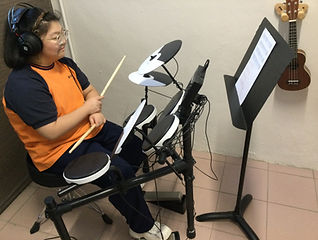
日期:2026年5月17日 演出項目:STEAM鼓 演出學生:陳加銘、胡梓豪、李芷恩、羅樂恩、區㸌翔、曾詠嘉、譚睿齊、張綽軒、黃韻同及李紫恩

日期:01-06-2026 地點:校外 參與學生 / 組別:高中選修


Visual Arts
Learning Goals:
-
To use different techniques and tools to create through appropriate VA activities.
-
To inspire imaginations and ability to create.
-
To enhance ability to judge and to observe things around in daily life.
-
To enhance students interest in VA and develop the interest in VA for their leisure.
Curriculum Framework
-
Strands:
- Knowledge
-
Creativity
-
Appreciation
-
Learning modes and media:
-
Sketching
-
Drawing
-
Printmaking
-
Design
-
Sculpture
-
Crafts
-
Ceramic Art
-
Computer Aided Design
-
Assessments
-
Students can understand more about their own development in VA skills through a variety of assessment activities, such as teacher observation in class, artworks creation, Student Learning Profiles, self-evaluation and peer evaluations.
-
Formative assessments are conducted during lessons. The evaluation will be recorded in the Unit Reports to assess the learning progress of the students. Teachers can then adjust the learning contents according to the students’ learning progress.
-
By the end of the school term, teachers will summarize and evaluate the performances of the students and record in the Academic Reports in order to have a full evaluation of students’ performance and progress.
Features of the Curriculum
-
Life-wide learning: Students engage in inquiry-based learning, design and showing visual arts works through activities inside and outside the school, and gain experience about aesthetics and arts.
-
Experiential learning: Students are encouraged to gain ideas for creation and appreciation the art works from things around in their daily life. They are also encouraged to learn through observation, so that they become more sensitive to details in their living.
-
Students are engaged in art creation through different media (e.g. sketching, drawing, printmaking, design, sculpture and craft, etc.), through the above activities, students are alo enhanced their communication skills and inquisitiveness.
-
Students participate in different internal and external visual arts activities and competitions with the help of different external resources. Our students have shown keen participation in expressing their creativity and sense of cooperation with others.
-
Our school has organized different exhibitions and activities to showcase students’ arts works to promote inclusion of the intellectual disabled individuals in society. At the same time, we hope to enhance our students’ creativity and skills to express with visual arts, so as to enrich their personal experiences and fruitful memories.
Activities & Awards


日期:01-06-2026 地點:校外 參與學生 / 組別:高中選修
Physical Education
Learning Goals:
-
To acquire sports skills and knowledge so as to build a positive, active and healthy lifestyle.
-
To cultivate interests in different sports and develop a habit of appreciating and participating in different sport activities.
-
To promote development in motor skills so as to improve body coordination and fitness.
-
To understand the importance of co-operation through group activities, so as to build a sense of belonging and responsibility towards a team.
-
To cultivate an attitude of justice, perseverance and sportsmanship.
Curriculum Framework
-
Basic Activities (Primary Section)
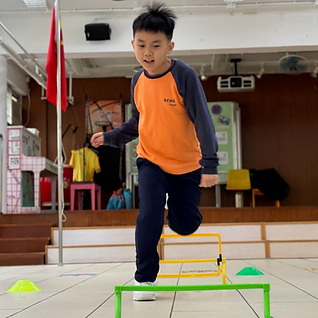
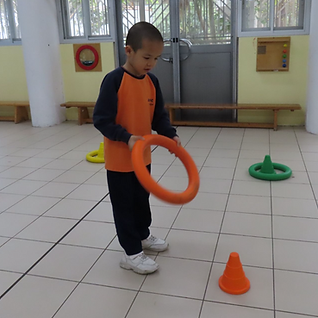
- Primary Section: Games, body control, sports object manipulative skills
-
Athletics (Primary and Secondary Section)
- Track events, Field events
-
Basketball (Primary and Secondary Section)
- Game, passing, dribbling, catching and shooting, , competition
-
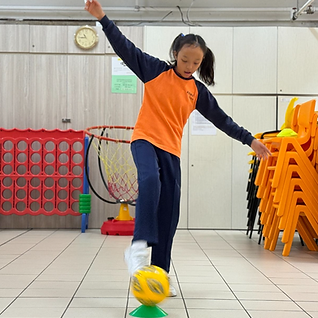
Football (Primary and Secondary Section)
- Game, passing, dribbling and shooting, competition
-
Volleyball/Mini-volleyball
- Game, underarm pass, overarm pass, smash, underarm serving a ball, competition
-
Handball (Primary and Secondary Section)
- Game, underarm pass, overarm pass, smash, underarm serve a ball, competition
-
Badminton (Primary and Secondary Section)
- Game, serve a ball, different strokes, steps
-
Table tennis (Primary and Secondary Section)
- Game, forehand stroke, block, serve a ball, receiving
-
Dancing (Primary and Secondary Section)
- Folkdance, creative dance, modern dance
-
Shuttlecock (Primary and Secondary Section)
- Game, knee kick, kick with inside of the foot, top of the foot, outside of the foot
-
Rope skipping (Primary and Secondary Section)
- Game, single freestyles, pair freestyles
-
Gymnastics (Primary and Secondary Section)
- Bench activities, mat-work, gymnastics equipment
-
Physical fitness (Primary and Secondary Section)
- Duration run on treadmills, fitness exercise bikes, rowing machines, other physical fitness training
-
Others (Primary and Secondary Section)
- School-based swimming training, outdoor education camps, sports days
Assessments
-
Students can understand more about their own development in VA skills through a variety of assessment activities, such as teacher observations in class, artworks creation, Student Learning Profiles, self-evaluation and peer evaluations.
-
Formative assessments are conducted during lessons. The evaluation will be recorded in the Unit Reports to assess the learning progress of the students. Teachers can then adjust the learning contents according to the students’ learning progress.
-
By the end of the school term, teachers will summarize and evaluate the performances of the students and record in the Academic Reports in order to have a full evaluation of students’ performance and progress.
Features of the Curriculum
-
To encourage our students to develop an active and healthy lifestyle, there are morning exercise periods regularly held every week (e.g., exercise with the school song, towel exercise, Happy Exercise Together). Fitness Class is introduced to students who are required more exercise.
-
Fitness tests are conducted regularly to create a mindset of maintaining fitness. It is hoped that students pay more attention to their own fitness conditions and hence participate in training for improvement. They are also encouraged to cultivate an effective and suitable exercising habit for themselves.
-
Sports training are held regularly to encourage students to cultivate sportsmanship during their participation in sports activities.
Activities & Awards

日期:10-9-2026 地點:校內 參與班別/組別:全校

請按此瀏覽更多相片

日期:14-09-2025 地點:校外 參與學生 / 組別:個別學生
日期:10-9-2026 地點:校內 參與班別/組別:全校
_HEIC.png)
_JPG.jpg)
_JPG.jpg)
Library
Learning Goals:
-
To cultivate interest and a habit of reading to improve student’s reading skills and allow them to learn to use libraries properly.
Curriculum Framework
-
Knowing the School Library
- Facilities and rules
-
Caring for Books
- Wash hands before reading and keep library books clean
-
Do not make library books dirty
-
Do not eat and drink while reading
-
Do not take off the book jackets or tear off pages from books
-
Return books to the carts
-
Put the borrowed books into the reading folder
-
Gently turn pages when reading
-
Use a bookmark properly when needed
-
Be careful when using 3D books
-
Rules in Library
- Do not talk loudly
-
Queue up when borrowing books
-
Return the books on time
-
Report to the teachers if the books are damaged
-
Be aware of the borrowing system
-
Reading skills
-
Basic understanding (book cover, contents page, preface, author, publisher)
-
Reading strategies (e.g., 5W1H reading skills, sequencing pictures, storytelling, making predictions by using the front cover or headings, seeking information by questioning)
-
Clarifying the meaning of unknown words with the use of a dictionary
-
Using the content page to get a rough idea of what are included in the book and which page to find it on
-
-
Book searching
- Genres
-
Categorization
-
Bookshelf sorting
-
Book index
-
Search for books on computers
-
Online reading
- Logging in related websites
-
Skills of downloading information from the internet
-
Cultivating a good online reading habit
Features of the Curriculum
-
Students have library period once every week. A wide range of learning activities (including listening to storytelling, reading e-books, role-play, book lending service, creating school-based library books) are introduced to cultivate reading skills, interests, and a sense of responsibilities. At the same time, we encourage parent-child reading to improve communication among the family, so as to promote a reading interest and establish good parent-child relationship.
-
Talks, Story Day and related competitions are held to allow students to have the opportunity to appreciate and learn the skills in expressing stories in order to build up their confidence in language use.
-
Students can borrow books at the School Library located on 6/F during Library lessons, so that they familiarize themselves with the library facilities. Students can also play and share toys at the Toy’s Corner in the library to practise social skills.
Activities & Awards

日期:04-02-2026 地點:校內 參與學生 / 組別:全校
日期:04-02-2026 地點:校內 參與學生 / 組別:全校

Other Learning Experience
Learning Goals
-
To develop and nurture students’ potential, interests and enhance their diversified developments, apart from the basic subject, we have introduced a school-based curriculum for Other Learning Experiences (OLE) (for Basic Education Curriculum). With this, we aim to offer students a variety of learning experiences, with reference to the mode of learning of the OLE in NSS curriculum.
Curriculum Framework
-
Our school-based OLE (P1-S3) curriculum offers programmes under 12 different aspects. Two OLE lessons are scheduled each week, with each lesson lasting 30 minutes. Depending on the learning content, each programme may span over one or two units. Teachers will set learning targets on knowledge, skills and attitude at the beginning of each unit, and evaluate the learning outcome of the students by the end of the unit. The following diagram shows 12 different aspects covered in the OLE (P1-S3) curriculum.
.png)
Activities & Awards

日期:13-05-2026 地點:校外 參與學生 / 組別:個別學生
日期:13-05-2026 地點:校外 參與學生 / 組別:個別學生
_JPG.jpg)
_JPG.jpg)
Humanities
Learning Objectives
-
Students can enhance their humanistic qualities, respect the value of every individual, cherish themselves, and care for the well-being of others, thereby fostering a caring and inclusive society.
-
Through moral education and character development, students can cultivate holistic growth, learn to treasure life, and live with a proactive attitude and proper values.
-
By studying topics such as the development of Hong Kong society, Chinese culture, significant historical events and figures, and the connections between our country and the world, students can become more aware of social and national development, deepen their understanding of the country and society, and recognise and respect their roles within them, contributing to the well-being of their families, communities, the country, and the world.
-
Through diverse inquiry-based and experiential learning activities, students can increase their interest in learning, explore issues from multiple perspectives, stay engaged with developments in society, the country, and the world, actively construct knowledge, promote self-directed learning, and reflect on their own values.
-
Students can connect learning with daily life by analysing current social issues and studying practical topics, developing into active learners within familiar contexts and themes.
-
Through facilities and activities provided by museums, community organisations, and external institutions, students can step outside the classroom, engage with society, and learn from real-life experiences.
Curriculum Planning:
-
The school's Science curriculum (From P.1 to S.3) will be gradually implemented according to the following timeline:
.jpg)

Assessment Methods
-
Teachers will observe and assess students' performance through various methods, such as observing their participation in class and performance in assignments, and documenting these in teaching plans and unit reports for continuous monitoring of students' progress.
-
At the end of each unit, teachers will conduct summative assessments to evaluate students' overall learning performance in that unit.
-
Before the end of the academic year, teachers will record students' overall performance in the academic report based on class participation and summative assessment results from each unit, providing a comprehensive review of students' learning performance and progress.
Course Features
-
The course is organised around units, planned according to the principles of "horizontal integration" and "vertical coherence". Each unit includes the elements of knowledge, skills, values and attitudes.
-
Knowledge: Unit content covers “Health and Living”, “Environment and Living”, “Financial Management and Economy”, “Community and Citizenship”, “Our Country and Me” and “The World and Me”, allowing students to progressively build knowledge in various aspects.
-
Skills: Through various activities, students can develop learning skills in different aspects such as observation, comparison, analysis, data collection and processing, interpersonal skills, and life skills.
-
Values and Attitudes: Through activities like unit projects and service learning, students can cultivate essential values and attitudes, including respect for others, sense of responsibility and national identity.
-
Emphasizing Experiential Learning: The course emphasises learning through experience, employing inquiry-based activities such as interviews, field studies, and project research to encourage students to actively discover knowledge.
-
Diverse Thinking Strategies: Students are guided to think, explore, and solve problems from different angles through various thinking strategies, such as comparing similarities and differences, using the five-sense method, and learning the 5W1H method.
Activities & Awards
日期:11-05-2026 地點:校外 參與學生 / 組別:個別學生

日期:06-03-2026 地點:校外 參與學生 / 組別:小太陽

日期:22-01-2026 地點:南豐紗廠 參與學生 / 組別:高小組
日期:11-05-2026 地點:校外 參與學生 / 組別:個別學生

Learn about closed circuits
Primary Science
Learning Objectives:
The Primary Science curriculum aims to enable students to discover scientific concepts and principles in everyday life through scientific inquiry and engineering design, as well as to understand how the application of science and technology improves human life. During the process of scientific inquiry, students will apply their scientific knowledge to solve real-world problems, enhance their scientific thinking and creativity, and cultivate positive values and attitudes.
Curriculum Planning:
-
The school's Science curriculum (From P.1 to S.3) will be gradually implemented according to the following timeline:

Learn about the generation of sound

Learn about the positive and negative terminals of a battery

-
The curriculum is designed based on the Education Bureau’s guidelines and appropriately adjusted to meet students' capabilities and needs. A school-based curriculum is established to allow students to progressively learn a wide range of scientific knowledge and delve deeper into various scientific phenomena and issues.
-
The thematic units cover four domains: "Life and Environment," "Matter, Energy, and Change," "Earth and Space," and "Engineering, Design Cycles, and Applications". These are integrated with two key curriculum focuses: "Scientific Inquiry" and "Engineering Design and Innovation." Learning topics are combined into units that are "practical", "engaging", and "diverse" according to students' abilities.
-
To match students’ cognitive development, the curriculum adopts a cyclic model, with adjustments made to the learning content. Students are grouped across grade levels based on their abilities to reduce discrepancies within groups and cater to learning diversity.
Assessment Methods:
-
The school's curriculum adopts a variety of assessment methods, including practical assessments, oral presentations, learning portfolio records, self-evaluation, and peer evaluations, etc., to conduct both formative and summative evaluations of each student's progress in learning science.
Curriculum Features:
-
This curriculum emphasises diverse and engaging learning experiences to encourage students to observe common scientific phenomena in daily life, cultivate their curiosity, and understand the scientific concepts behind them.
-
In each learning unit, students will follow the content of the "Inquiry Workbook" to engage in different types of learning activities that inspire them to actively explore and discover knowledge. They will apply what they learn in real-world contexts to solve problems.
-
Through "hands-on and minds-on" learning activities, students will learn diverse scientific thinking patterns and inquiry methods, inspiring them to think, explore, solve problems, and create new things from multiple perspectives. This will enhance their creativity and problem-solving skills.
Activities & Awards

日期:18-12-2025 地點:香港動植物公園 參與學生 / 組別:初小組

日期:23-10-2026 地點:校內 參與學生 / 組別:初小組
日期:18-12-2025 地點:香港動植物公園 參與學生 / 組別:初小組